

Paint Protection Film (PPF) is the ultimate automotive safeguard, offering a high-impact, self-healing urethane barrier that prevents rock chips, chemical stains, and swirl marks. Unlike traditional surface treatments, it adds physical thickness, essentially acting as a “second skin”, to preserve the factory paint’s depth and ensure long-term resale value for discerning owners. This invisible armor is the primary way to stop damage before it reaches a vehicle’s delicate clear coat.
For many automotive enthusiasts, the quest for a “forever finish” feels like a losing battle against the entropy of the open road. You purchase a vehicle, admire the unblemished depth of its factory paint, and then watch as the first week of commuting delivers the inevitable: a jagged rock chip on the hood or a mysterious swirl mark on the door. While the industry has spent decades marketing waxes and sealants as the answer, these are often just temporary, topical solutions.
The real secret to maintaining a showroom-quality finish isn’t found in a bottle or a spray it is found in the structural integrity of high-grade urethane. This is the realm of Paint Protection Film.
Why PPF Outperforms Traditional Protection
To understand why paint protection film is the premier choice for vehicle care, it helps to see how it stacks up against standard maintenance routines. While some methods focus solely on aesthetic shine, PPF is engineered for durability and impact resistance. Many owners mistakenly believe that a liquid coating can stop a stone at highway speeds, but physics tells a different story. A liquid coating is measured in microns; a high-quality film is measured in mils.
| Feature | Standard Surface Care | Paint Protection Film (PPF) |
| Primary Benefit | Topical shine | Physical impact resistance |
| Self-Healing | No | Yes (Heat-activated) |
| Chip Prevention | Zero | High-grade urethane barrier |
| Longevity | Short-term | Long-term (Years of coverage) |
| Maintenance | Constant reapplication | Durable and resilient |
When researching high-end vehicle preservation, many enthusiasts find that paint protection film Long Island, NY services offer the most robust defense against coastal debris and harsh road salt. This highlights the necessity of a thicker, energy-absorbing layer rather than a simple liquid application. In environments where road construction and heavy traffic are the norm, the “sacrificial layer” concept of PPF becomes the only logical choice for someone who values their vehicle’s aesthetic and financial worth.
5 Reasons PPF is a Must-Have for Flawless Care
1. Heat-Activated Self-Healing
The most advanced feature of modern PPF is its ability to “heal.” The top layer of the film is composed of elastomeric polymers that, while solid, maintain a level of “memory.” When the surface is marred by light scratches, the kind typically caused by improper drying techniques or light brushes against bushes, the film reacts to heat. Whether it is the natural warmth of the sun or a splash of warm water, the polymers return to their natural, smooth state, causing the scratches to vanish before your eyes.
2. Invisible Shielding
There is a lingering misconception that “clear bras” are bulky, yellowing plastic sheets that ruin a car’s lines. Today’s technology has rendered that obsolete. High-end films are optically clear, meaning they do not distort the light reflecting off your paint. Whether your car is a deep metallic black or a vibrant “frozen” matte finish, there is a film designed to remain entirely undetectable while sitting flush against the body lines.
3. Chemical and Stain Resistance
The clear coat on your car is surprisingly porous. This is why bird droppings, tree sap, and acid rain can “etch” into the paint if not cleaned immediately. PPF acts as a non-porous barrier. For those who frequent the shore or navigate the salted highways of the Northeast, this protection is vital. It prevents chemical bonding, ensuring that even the most corrosive environmental hazards can be wiped away without leaving a permanent mark on the paint.
4. Preserved Resale Value
A vehicle is an investment, and nothing depreciates that investment faster than a “peppered” front end. Prospective buyers and dealerships look closely at a car’s “leading edges”, the bumper, hood, and side mirrors. By keeping the original factory paint in showroom condition under a layer of film, you effectively pause the exterior’s aging process. For those looking for a long-term solution, a high-quality Long Island, NY paint protection film installation ensures that even the most vulnerable areas of a car stay factory-fresh despite daily driving.
5. Advanced UV Protection
UV radiation is the silent killer of automotive paint. Over time, the sun’s rays break down the chemical bonds in the paint’s pigment, leading to oxidation and fading. This is particularly noticeable on red, yellow, and blue vehicles, which can turn “flat” or chalky. PPF contains specialized UV inhibitors that filter out these harmful rays, keeping the color as vibrant as the day it was sprayed at the factory.
Debunking the Myth: “PPF Will Damage My Paint During Removal”
A common industry myth suggests that removing protection film will peel the factory paint or leave behind a sticky, ruined mess. This is false when the application and subsequent removal are performed correctly.
- Professional Adhesion: The adhesives used in premium films are designed to bond securely enough to withstand high-pressure washes and triple-digit speeds, yet they are engineered to be “clean-release.” When a professional uses a controlled heat source or steamer, the adhesive softens, allowing the film to be pulled away without stressing the clear coat.
- Non-Permanent Bond: Unlike some aftermarket spray-on finishes or low-quality vinyl wraps, PPF is a removable layer. It is intended to be a sacrificial shield. If the film gets damaged while saving your paint, you simply replace the film, not the paint. This leaves the original surface in its pre-installation state once the film is retired.
Applying our Precision-Fit Protocol to Solve This
The secret to a truly flawless finish lies in our proprietary Precision-Fit Protocol. This system is the culmination of decades of hands-on automotive experience and a deep understanding of modern paint systems. We believe that protection is only as good as the installation; if you can see the edges, the “magic” of a flawless vehicle is lost. Our protocol is a rigorous, multi-step system designed to eliminate the common visual “tells” of film installation.
1. Surgical Prep and Surface Decontamination
A clean surface is the absolute foundation of a successful installation. We begin with a multi-stage cleaning process that goes far beyond a standard wash. This includes removing iron deposits, claying the paint to extract embedded contaminants, and a final chemical wipe-down. This ensures the film bonds perfectly to the clear coat without trapping dust or debris that could cause bubbles or lifting later.
2. Custom-Fitted Digital Plotting
In the early days of the industry, installers would lay large sheets of film over a car and use a razor blade to cut the shape manually. This is a high-risk practice. Our Precision-Fit Protocol utilizes accurate pre-cut patterns. By using high-precision digital templates, we ensure the film fits the specific curves, sensors, and badges of your year and model without ever risking a blade mark on your factory paint.
3. Edge Wrapping and Final Curing
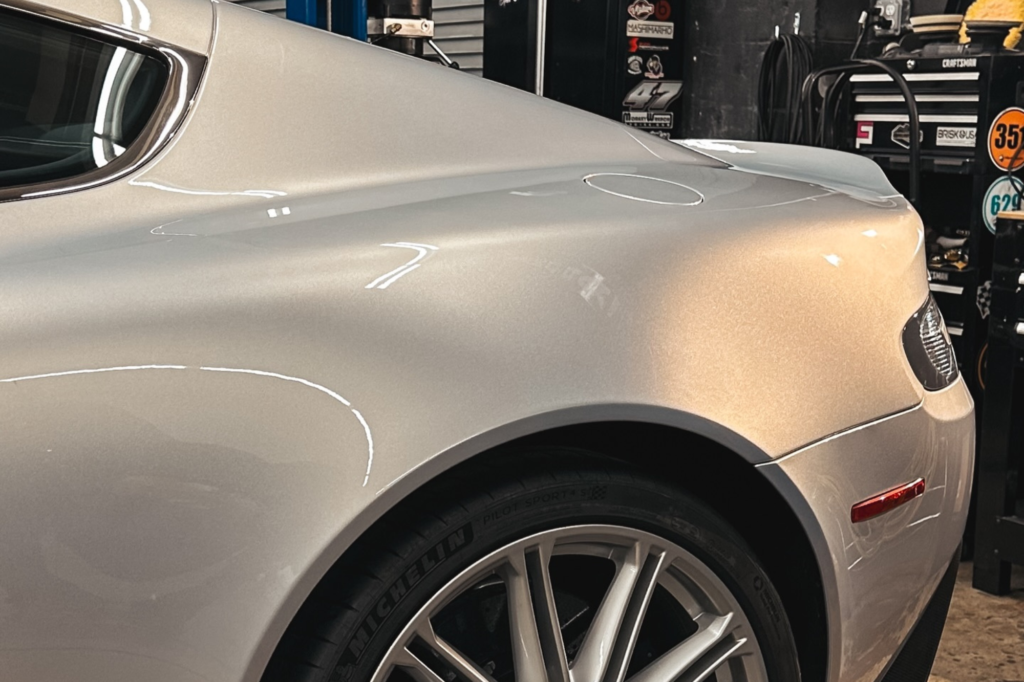
The final hallmark of our protocol is the attention to body lines and edges. We use a combination of hand-stretching and alignment techniques to ensure an even, clean finish. Wherever the vehicle’s design allows, we wrap the film around the edges for a “gapless” look. This specialized paint protection film in Long Island technique ensures a seamless appearance where the film is tucked out of sight. Finally, every section is inspected under high-intensity lighting to ensure the bond is secure before the vehicle leaves our shop.
The Longevity of Professional Care
When you choose to invest in high-caliber film, you aren’t just buying a product; you are buying time. Most traditional waxes disappear after a few washes. Even advanced liquid coatings require periodic “toppers” to maintain their efficacy. PPF, however, is a set-it-and-forget-it solution. With basic maintenance, simple hand washes, and the occasional sealant, the film will remain crystal clear and protective for years.
This is particularly important for owners of high-performance vehicles or daily drivers who see heavy use. The peace of mind that comes from knowing your car is physically shielded allows you to actually enjoy the vehicle rather than obsessing over every gravel truck you pass on the highway.
In Summary
631 Coatings Paint Protection Film represents the pinnacle of modern vehicle preservation. By combining advanced polymer technology with precision installation, it offers a level of defense that manual cleaning and topical treatments simply cannot match. It serves as the ultimate barrier between your investment and the world, absorbing the impacts and chemicals that would otherwise degrade your car’s finish. It allows owners to drive with confidence, knowing their vehicle is shielded against the unpredictable nature of the road. In a world where “perfect” is hard to maintain, PPF is the secret weapon that makes it possible. Protect your vehicle before the road takes its toll.
Contact us today to learn more or book your installation.
People Also Ask (FAQ)
Does PPF change the look of my car?
No. High-quality film is designed to be optically clear and invisible. It maintains the factory finish, whether gloss or matte, while adding a layer of protection. It can actually enhance the paint’s appearance by filling in microscopic imperfections.
Can I wash my car like normal?
Yes. Once the film has fully cured (usually about a week after installation), you can wash the vehicle normally. However, to maximize the film’s life, we recommend using the two-bucket hand-wash method and avoiding high-pressure nozzles held too close to the film’s edges.
Is PPF a permanent modification?
While it is designed for long-term use (often lasting 7 to 10 years), it is not permanent. It can be safely removed by a professional at any time, leaving the paint underneath in the exact same condition as on the day of installation.
How does the self-healing work?
The film reacts to heat. The top layer is a highly flexible polymer. If a light scratch occurs, heat from the sun, a heat gun, or even a warm engine helps the material “flow” back into its original smooth shape, effectively erasing the damage.
Will the film turn yellow over time?
Modern films are made from aliphatic polyurethane, which is resistant to UV degradation. Unlike the PVC-based films of the past, today’s premium films are guaranteed to stay clear and will not yellow or crack under normal conditions.